LAND USE AND SPATIAL PLANNING AUTHORITY

LUSPA undertakes compliance monitoring on MMDAs’ Spatial Planning and Human Settlement Management Mandate in the Greater Accra Region

Land Use and Patial Planning Authority, has undertaken a compliance monitoring on Spatial Planning and Human Settlement Management Mandate of the Metropolitan, Municipal and District Assemblies (MMDAs) in the Greater Accra Region.  

 The exercise which commenced on Tuesday, April 21 2026 would end on Thursday, April 30 2026 covering the 29 MMDAs in the region and will also be extended to the rest of the 232 MMDAs nationwide.

The focus of the compliance monitoring is on the execution of their spatial planning duties such as preparation of spatial plans, planning and development permitting application, approval procedures, development control measures, change of use and rezoning among others in accordance with Land Use and Spatial Planning Act, 2016 (ACT 925) and Land Use and Spatial Planning Regulations 2019 (L.I 2384).

It would also assess opportunities, challenges and capacity gaps relevant to the Technical Sub-committees and Spatial Planning Committees of the MMDAs as well as promotion of awareness and education regarding Land Use and Spatial Planning matters.

The assessment was conducted through engagement with the Technical Subcommittees and Spatial Planning Committees of the various Assemblies.

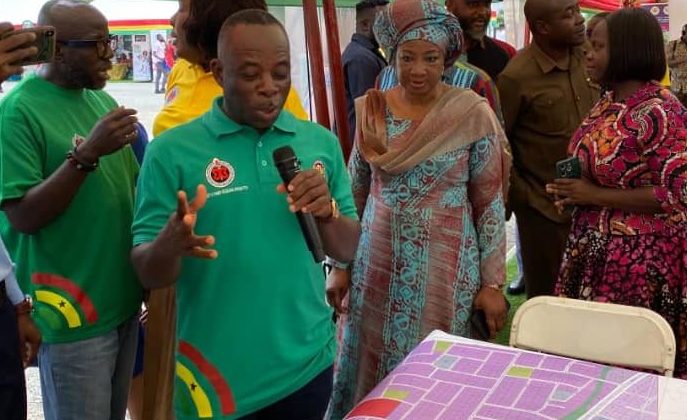
The Deputy Minister of Local Government, Chieftaincy and Religious Affairs Rita Odoley Sowah and the Chief Executive Officer (CEO) of Land Use and Patial Planning Authority, Dr Kwadwo Yeboah who visited Accra Metropolitan and Korley-kolottey Municipal Assemblies appealed to the Technical Subcommittees and Spatial Planning Committees to work as a team to ensure harmonious development.


Read More

Luspa holds mid-year meeting with Regional Spatial Planning Directors.

Land Use and Spatial Planning Authority (LUSPA) has organized a mid-year meeting with Regional Spatial Planning Directors to take stock of the implementation of their action plans, reflect, reset and chart a common course on sustaining the gains and address challenges for effective service delivery.

The meeting was held on Thursday, July 24, 2025 at the Institute of Local Government Studies in Accra.

 In his welcome address, the Chief Executive Officer (CEO) of the Authority, Dr. Kwadwo Yeboah said the purpose of the meeting was to initiate an attitudinal change process in the staff as a critical requirement for resetting Land Use and Spatial Planning Authority to be more proactive, financially independent and motivated public service agency.

He urged the staff to be creative, innovative, and generate ideas to address the challenging spatial planning issues across the country which affects the lives of the people.

He emphasized on the need to build more collaborations, coordination, cooperation and establish new partnerships with stakeholders to enable the staff achieve the overall mandate of the authority.

The authority has continued extensive public sensitization programmes using various platforms including media, communities and stakeholder engagements focusing on spatial planning issues such as land use and spatial planning laws and regulations, preparation and implementation of plans, development control, and permitting.

The Regional Directors made presentations on spatial planning activities in the respective regions at the meeting.

Read More

Luspa educate the public on Spatial Planning activities at a four-day Civil Service Week policy fair.

Land Use and Spatial Planning Authority (LUSPA) has educated the public on spatial planning activities at the policy fair organized by the Office of the Head of the Civil Service as part of activities marking the 2025 Civil Service Week Celebration and 2024 Awards Ceremony.

The policy fair held from 21st to 24th July, 2025 at the Accra Sports Stadium provided the opportunity for Ministries, Departments and Agencies to showcase their services to the public and create appropriate interface for enhanced service delivery.

 The Authority used the policy fair to display and demonstrate to the public the services it provides and also created the needed interface with public officials, academia, private sector service providers and the public who participated in policy fair.

The public education was centered on the planning and development permits, flood hotspots in Accra, the revised east cantonment residential area local plan, airport west residential area zoning scheme and residential area local plan, petroleum hub local plan, industrial enclave and urban renewal project, Appiatse reconstruction local plan, Ashanti Regional spatial development framework and the national spatial development framework. It also created awareness on the need to adhere to spatial planning standards and process for orderly human settlement.

Some participants commended the authority for the positive steps and expressed their readiness to also share the message with the rest of the public to comply with spatial planning requirements and obtain planning permits.

Read More

Stakeholder Consultative Meeting On The Land Use and Spatial Planning Amendment Bill 2023.

Stakeholder consultative meeting on the land use and spatial planning amendment bill 2023.

A stakeholder consultative meeting on Land Use and Spatial Planning Amendment Bill 2023, has been held by the Land Use and Spatial Planning Authority in collaboration with the Ministry of Local Government, Decentralization and Rural Development.
The amendment of the Land Use and Spatial Planning Act, 2016 (Act 925) is to strengthen the Authority to properly carry out its mandate of providing for sustainable development of land and human settlements and also bring sanity into development control challenges that have affected proper settlement planning.
It is also in pursuant to the recent realignment of the Authority from the Ministry of Environment, Science, Technology and Innovation to the Ministry of Local Government, Decentralization and Rural Development.
The Acting Chief Executive Officer (CEO) of the Authority, Mr. Kwadwo Yeboah urged participants to critically assess the draft amendment bill and make inputs that would provide practical answers to the issues for effective implementation of the bill when passed by parliament.
The stakeholders were from Local Government Services, the Regional Coordinating Councils (RCCs) and Metropolitan, Municipal and District Assemblies (MMDAs) across the country.
They also included relevant land sector agencies in the public sector and professional bodies whose activities complement effective land management.
They made critical inputs into about sixteen (16) sections as well as the interpretations of the act for amendment.

Read More

Invitation For Tenders For The Construction Of LUSPA Head Office Building At Accra.

Invitation for Tenders for the Construction of LUSPA Head Office Building at Accra.

MINISTRY OF LOCAL GOVERNMENT, DECENTRALISATION AND RURAL DEVELOPMENT

LAND USE AND SPATIAL PLANNING AUTHORITY

Invitation for Tenders

Contract Title: Construction of Head Office Building at Accra

IFT REF:GR/LUSPA/NCT/WKA/01/23

1. The Government of the Republic of Ghana, acting through the Land Use and Spatial Planning Authority (the “Employer”), intends to apply a portion of its Funding to cover eligible payments under a contract for which this Invitation for Tenders (“IFT”) is issued. Any payments made under the proposed contract will be subject, in all respects, to the terms and conditions of the funding and conditions to the disbursement of funding. No party other than the Government and the Employer shall derive any rights from the funding or have any claim to the proceeds of the funding.

2. The Works and the Contract expected to be awarded under this IFT is: Construction of Head Office Building at Accra and to be completed in 15 calendar months.

3. The Land Use and Spatial Planning Authority now invites sealed Tenders (“Tenders”) from eligible and qualified entities or persons (“Tenderers”) to provide the works referenced above.

4. More details on the requirements are provided in the Bills of Quantities, Specifications, Performance Requirements and Drawings included in the Tender Documents accompanying this IFT.

5. This IFT is open to all eligible and qualified Tenderers who wish to respond to the relevant “Tender Documents”. Qualification requirements are as described in Section III. Evaluation and Qualification Criteria.

6. A contractor will be selected under a competitive Tendering method through the evaluation procedure which is described in the Tender Documents, in accordance with the Public Procurement Act, 2003 (Act 663) as amended which are provided on the PPA website at www.ppa.gov.gh.

7. It is mandatory that Tenderers include in their tender the under listed statutory requirements.
• Valid GRA Tax Clearance Certificate.
• Valid SSNIT Clearance Certificate.
• Valid VAT Registration Certificate
• Valid Business Registration Certificate
• Valid Certificate of Incorporation
• Valid Certificate of Commencement.
• Valid Works and Housing Certificate of Financial Class (D1K1)
• Valid Labor Certificate
• Valid Registration Certificate from PPA
• A Tender Security in the sum of GH¢500,000.00

8. Eligible Tenderers interested in obtaining the Tender Documents may obtain further information and inspect the Tender Documents at the address as indicated below from 10.00 to 4pm local time.

9. A complete set of Tender Documents in English may be purchased from the Head Office of the Land Use and Spatial Planning Authority, Ministries, Accra at the address as indicated below from 10.00 am to 4.00 pm local time, by interested Tenderers on the submission of a written application to the address as indicated below and upon payment of a non-refundable fee of GHC2,000.00 for each set of Tender Documents. The method of payment will be by Banker’s Draft or cash payable to the Head office of the Land Use and Spatial Planning Authority in Accra.

10. The deadline for submission of Tenders is Wednesday, June 14, 2023 at 10.00GMT. Tenders must be delivered to the address as indicated below on or before the time specified above.

Location: Land Use and Spatial Planning Authority, Head Office
Street No.: Block D Service Drive, Ministries, Accra
Floor Number: 2nd Floor, Room 6, Main Block
Tel: 020 647 8112 / 024 187 5846 / 020 452 1804
E-mail: info@luspa.gov.gh

11. All Tenders must be accompanied by a Tender Security in the form and amount specified in the Tender Documents.

12. Tenders will be opened immediately after the deadline for submission in the presence of Tenderers’ representatives who choose to attend at the venue and location indicated below:


Location Land Use and Spatial Planning Authority, Head Office
Street No. Block D Service Drive, Ministries, Accra
Floor Number: 2nd Floor, Conference Room, Main Block

Read More

Stakeholder Engagement On The Final Draft For A Structure Plan Report On The Greater Accra Metropolitan Area (GAMA) Project.

The Land Use and Spatial Planning Authority and the Department of Urban Roads has organised a stakeholder engagement to discuss the final draft report by COWI on the Greater Accra Metropolitan Area (GAMA) Structure Plan.
The engagement was the third after the inception and interim reports were presented to stakeholders for their inputs last year.
The project is been executed on behalf of the Ministry of Roads and Highways by the Department of Urban Roads with the Land Use and Spatial Planning Authority (LUSPA) as the principal technical organization overseeing its implementation.
The comprehensive Structure Plan for GAMA is “a dimensionally accurate spatial plan used to guide the development or redevelopment of an urban area, town or city and its peripheries or contiguous locations connected to its future development”.
It would be implemented in 32 Metropolitan, Municipal and District Assemblies in the Greater Accra, Central and Eastern Regions.
The over concentration of population in GAMA has brought in its wake several urban development challenges such as disorderly land use and uncontrolled urban sprawl leading to increased environmental degradation.
There has also been massive stress on the limited infrastructures and services, with the most visible being slums, rapid sprawl, traffic congestion, poor access to water and sanitation, with the physical expansion of GAMA reflecting weak urban governance and institutional coordination.
Currently, urban development has spread well beyond the boundary of the 1991 Strategic Plan coupled with uncoordinated spatial development.
In 2017, the Greater Accra Spatial Development Framework (GARSDF) was developed and provided a clear development vision for the region and guidance on land use decisions and investments.

Read More

Land Use and Spatial Planning Authority Joins Other Land Sector Agencies To Develop Modalities For Flood Prevention In Accra.

While the general perception is to own a ready-to-move home built by a developer, there are several who look to construct their own house customised to one’s requirements. Now, that may not be an easy task for all as it takes a lot of things into account.

Building a home often seems a daunting task due to the number of variables involved: budget, size, building materials, etc. Byron is one company that has empowered Individual Home Builders (IHBs) with information and knowledge to build their dream home.

The primary objective is to provide knowledge, share expertise, make them aware of the latest and innovative products, give them financial guidance in a more systematic and authentic manner.

The emphasis is on the needs and requirements of the IHBs and endowing them to be the architect of their dream homes. As the world is grappling with a pandemic forcing everyone to be at home; providing intelligent, inclusive and strategic solutions to consumers within the comfort of their homes is what is offered by this company.

Read More

CEO Of Land Use and Spatial Planning Authority Pays A Working Visit To Ashanti Regional Office

The acting Chief Executive Officer (CEO) of Land Use and Spatial Planning Authority (LUSPA), Mr Kwadwo Yeboah has paid a working visit to the Ashanti Regional Office of the Authority.
This was when he and the heads of other agencies of the Ministry of Local Government, Decentralization and Rural Development accompanied the sector minister on a working visit to the Ashanti Regional Coordinating Council.

The CEO interacted with the staff of the regional office of the Authority and the Physical Planners from the Metropolitan, Municipal and District Assemblies (MMDAs) in the region whom he sought for first-hand information on the state of spatial planning in the Ashanti Region.
The meeting was also to deepen the relationship between the Authority and the Physical Planning Departments of the MMDAs.

He informed the regional staff that the Authority had been moved from the Ministry of Environment, Science, Technology and Innovation (MESTI) and re-aligned with the Ministry of Local Government, Decentralization and Rural Development (MLGDRD) to enhance functional efficiency.
He emphasized that the Land Use and Spatial Planning Act, Act 925 and the Land Use and Spatial Planning Regulations, L.I. 2384 were the primary legal frameworks that guided spatial and land use planning in the country.

He therefore tasked the heads of Physical Planning Departments of the MMDAs to make presentations on the state of spatial planning activities regarding plan preparation, permitting, Technical and Spatial Planning Committee meetings and public participation among others at their meetings for public understanding.

Read More

Stakeholder Engagement On The Interim Report For A Structure Plan On The Greater Accra Metropolitan Area (GAMA) Project

Stakeholder engagement on the interim report for a structure plan on the greater accra metropolitan area (gama) project.

The Land Use and Spatial Planning Authority and the Department of Urban Roads has organised a stakeholder engagement workshop to deliberate on the situational analysis report and proposed development scenarios for the structure plan of the Greater Accra Metropolitan Area (GAMA) Project.
The project is been executed on behalf of the Ministry of Roads and Highways by the Department of Urban Roads with the Land Use and Spatial Planning Authority (LUSPA) as the principal technical organization overseeing its implementation.

The comprehensive Structure Plan for GAMA is “a dimensionally accurate spatial plan used to guide the development or redevelopment of an urban area, town or city and its peripheries or contiguous locations connected to its future development”.
It would cover 32 Metropolitan, Municipal and District Assemblies in the Greater Accra, Central and Eastern Regions.
The over concentration of population in GAMA has brought in its wake several urban development challenges such as disorderly land use and uncontrolled urban sprawl leading to increased environmental degradation.
There has also been massive stress on the limited infrastructures and services, with the most visible being slums, rapid sprawl, traffic congestion, poor access to water and sanitation, with the physical expansion of GAMA reflecting weak urban governance and institutional coordination.
Currently, urban development has spread well beyond the boundary of the 1991 Strategic Plan coupled with uncoordinated spatial development.

In 2017, the Greater Accra Spatial Development Framework (GARSDF) was developed and provided a clear development vision for the region and guidance on land use decisions and investments.
It also provided a clear path and strategic proposals for producing a blueprint for the sustainable development of GAMA within the region.
The unbalanced development afflicting GAMA points to the urgent need for a spatial development plan that encourages corrective actions in the existing built-up areas and guide good practice for future land use decisions and investments in the metropolitan area.

It is expected that the Structure Plan, when finalized and approved by the relevant authority, would address the numerous challenges facing the Greater Accra Metropolitan Area in the areas of infrastructure, environment, urban development, economy, climate change, and land use among others.

Read More

Land Use and Spatial Planning Authority, The Anchor Of Ghana’s Infrastructure Development Planning.

Nations are classified as first world, second or third world nations based on the level of infrastructural and economic progress that transforms the lives of the citizenry.
When Ghana gained Independence in 1957, the founding Fathers realized that nations that were developing faster were those that their leaders placed premium on critical infrastructure for socio-economic transformation. The then Town and Country Planning Department (TCPD) now land Use and Spatial Planning Authority (LUSPA) was tasked in 1958 to prepared the post-independent comprehensive spatial plan for Accra dubbed “Accra: A Plan for the Town” to guide physical development to befit the status of a new capital city of an independent African State.

Similarly, the coming into being of the Land Use and Spatial Planning Authority (LUSPA) by Act 925 in 2016 and its implementation coincided with President Nana Addo Dankwa Akufo-Addo’s Coordinated Programme of Economic and Social Development Policies (CPESDP) 2017–2024 which identifies economic as well as social infrastructure as one of Ghana’s key strategic anchors.
In view of this, the Authority in collaboration with the Ministry of Energy developed spatial plans thus a Structure and Local plans for the development of a Petroleum Hub in the Western Nzema Traditional Area of the Jomoro Municipality.

The Authority has also collaborated with the Lands Commission to prepare a Structure Plan (SP) and Local Plans (LP) for the development of an Industrial Enclave and Urban Renewal Project at Afienya –Dawhenya-Prampram corridor in the Greater Accra Region.
The development of the Petroleum Hub Spatial Plans was guided by the Sustainable Development Goals, National Spatial Development Framework, Western Regional Spatial Development Framework, Energy Policy, the Petroleum Hub Infrastructure Master Plan, Manuals for the Preparation of Spatial Plans, Planning Standards and Zoning Regulations and the Riparian Buffer Policy.
The Structure Plan would guide and co-ordinate the allocation of land for various uses including key infrastructure such as Jetties, Storage Tanks, Refineries, Liquefied Natural Gas (LNG) Facility, Power Plant; Ancillary Infrastructure such as Water Treatment Facilities, Waste Management Centre, Commercial Services; and other social amenities within the proposed Petroleum Hub enclave.
The SP will also provide guidance and certainty to prospective developers, government and the general public regarding permissible and prohibited land uses in the project area.
The Local Plans for the petroleum hub on the other hand provide details of land use patterns showing individual plots of land for specific uses, open spaces, circulation, energy, water, and drainage systems among others.

The total estimated land size for the entire structure plan area is 51, 252 acres while the Petroleum Hub referred to as intervention area covers 20,000 acres of land and accommodates major facilities such as refineries, petrochemical industries and oil and gas tank farms, waste treatment plants.
The discovery and subsequent exploration of oil and gas in the Western Region of Ghana has contributed immensely to Ghana’s economic growth and development through job creation opportunities, oil and gas investment, and strategic planning of existing and future land use is necessary.

The Petroleum Hub Structure Plan Area encompasses twenty-three (23) settlements that are expected to experience major settlement growth and developments in the next fifteen (15) years.
The implementation of the Intervention Area has been scheduled in three phases within the ten (10) year implementation period whereas the settlements surrounding the Petroleum Hub will be implemented within fifteen (15) years’ timeframe of the Structure Plan.
In order to guide the implementation of the proposals in the Structure Plan Area (SPA), the Petroleum Hub Development Corporation Act, 2020 (Act 1053) mandates the Corporation to promote and develop the Petroleum Hub.

The Land Use and Spatial Planning Authority also collaborated with the Lands Commission to prepare a Structure Plan (SP) and Local Plans (LP) for the development of an Industrial Enclave and Urban Renewal Project at Afienya in support of the industrialization plan of government.
The Commission through an Executive Instrument E.I. 231 acquired 13,230.703 acres of land to be used for the Industrial Enclave and Urban Renewal Project. To achieve the objectives of such significant and economically essential initiative, it was of essence to prepare spatial and land use plans to order and regulate the use of land in an efficient and ethical way to ensure orderly development and thus preventing land use conflict.
The Structure Plan which would be used to guide the development and redevelopment of the enclave, has also been designed in harmony with the National Spatial Development Framework, the Greater Accra Regional Spatial Development Framework, and the Dangme West Spatial Development Framework to co-ordinate land uses and principally makes spatial proposals for industrial, residential, infrastructure and utility developments within the plan areas.
The Local Plans for the industrial enclave and urban renewal project on the other hand proposes specific forms of development and regulations for the use of land through to the planning at individual plot level within the Structure Plan area. The plan provides the basis for making decisions about individual applications for development permits at the respective District Assemblies and for street addressing.
In this particular plan, the land use provisions made include mixed uses (residential, office spaces and other commercial uses), open spaces, road reservations (carriage ways, pedestrian walkways, bicycle lanes, energy and communication networks) and ultimately industrial activities to attract investors.
With the completion of the plan preparation process and consequent approval by the relevant authorities, it is expected that development will proceed according to the proposals made in the Spatial Plans.
These plans are important documents that will shape not only the development of the Petroleum Hub and the industrial enclave and urban renewal projects areas but also communities that are within the immediate neighborhoods.
With the constant increase in Ghana’s populations and land as a fixed asset coupled with dwindling natural resources, development planning and control would help to secure a brighter future for current and the next generations.

All Ghanaians must be responsible citizens and support LUSPA and the decentralized planning systems at the Metropolitan, Municipal and District Assembly level by adhering to the development control laws and measures put in place to secure sustainable national development and safe environment.

Read More
  • 1
  • 2